

Is this just another article designed to be cross-linked so I can juice that sweet, sweet internet traffic? Or is this me dipping my toes into the world of camera reviewing, in the hopes that companies will ship me some sweet photo gear? The answer to both, perhaps, is a solid… maybe? I do love to ramble about stuff, so maybe I should ramble about some stuff I own.
While I’m old enough to have grown up in a world that predates digital photography, it’s accurate to say that this Minolta X-300s was my ticket into the world of “real” film photography. This, like the film cameras found across many collections, was a hand-me-down from my dad. This wasn’t the camera that sparked my love of photography—I had already spent years shooting professionally with Canon DSLRs and an assortment of L lenses (a necessity of my job), but I was stoked to get a new toy to play with.
I’m thankful my photography journey started with digital, as that meant I could dive right in to the world of 35mm and not waste too much film—and cash—taking terrible photos. I already knew the concepts of the exposure triangle, of framing, of waiting for the shot. All I had to do here, was load up some film and shoot. (After I paid a whole grip of money to get the internal capacitors fixed.)
Minolta’s X-300s was sort of an entry-level SLR, so there’s not exactly a ton of info on this specific model. What I can find is that it was introduced in 1990 as a more streamlined version of the X-300 first introduced in 1984—a mid-cycle refresh if we want to use car terms. The X-300s was also Minolta’s penultimate manual-focus camera, with the final “focus-your-own-damn-self” model being 1995’s X-370.
Though an entry-level model, with a plastic exterior and powered by just two LR44 button batteries, this thing is heavy. I love the tactility of the thing, from the weight of the film-advance lever to the loud “ka-chung” of the mirror doing its thing each time I press the shutter button. The viewfinder is nice and bright, which helps make the challenge of focusing manually that much easier. Some people relish how cameras like this force them to slow down and live fully in the moment to get that shot. I, however, lack patience, but I try to make it all work.
Those nerdy enough to scrutinize the top shot will notice that the 50mm f1.4 prime lens is an MC mount, suggesting that it wasn’t a kit lens included with purchase. (My dad doesn’t recall when, how or where he got the lens.) What this means is that this lens lacks the doodad (to use the scientific term) that tells the X-300s body what aperture it’s set at, meaning that I had to download the Lux app to spend even more time setting up my shot to kinda sorta get my exposure right. I’d go on to later buy a 45mm f/1.8 MD lens to let me just set things in Auto (aperture priority mode) and focus more on shooting.
I would go on to buy a few more film cameras, which I’ll ramble on about at a later time. And while those other cameras are easier to use, boasting true auto focus and an ability to use my collection of Canon L glass, I still find myself reaching for this Minolta nine times out of ten for anything film-related. I guess I like the way taking literal minutes to find focus just quiets my brain.
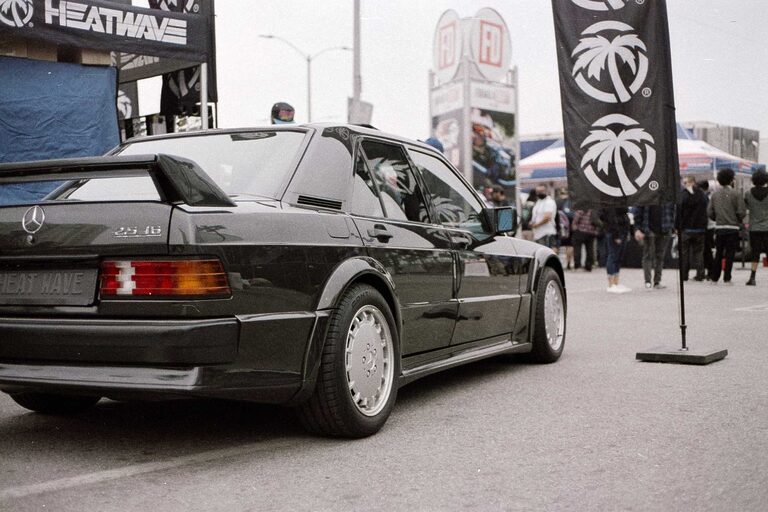
Here are some compressed-as-hell scans of photos I took with this camera. And yeah, I guess I am just another dirty hipster who shoots 35mm across Japan.